


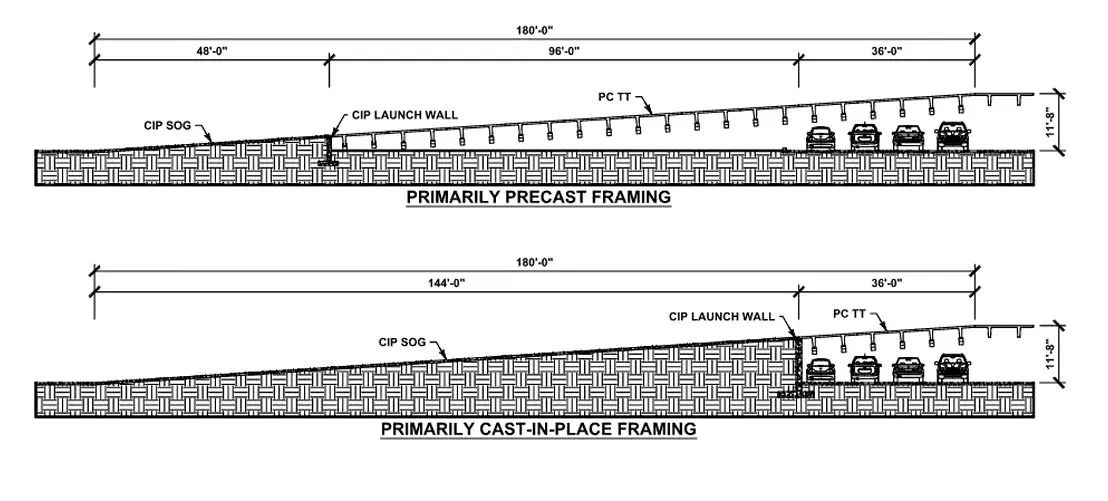
In precast parking structures, managing grade transitions—changes in elevation between different levels or areas—at walls is a critical design and construction element. Properly designed transitions ensure the structural integrity of the building, effective drainage, vehicle safety, and ease of construction. Here’s an overview of how grade transitions at walls are typically handled in precast parking structures:
1. Step Walls
A common approach to handling grade changes is through step walls. Step walls allow for abrupt changes in elevation between different levels of the parking structure. These walls have staggered or stepped segments that follow the slope of the ramp or driving surface.
- Advantages: Step walls are simple to design and install, as they are made of separate precast panels that can be connected at different heights.
- Considerations: When using step walls, careful coordination is required to ensure the panels align with the ramp profile and maintain structural stability.
2. Sloped Wall Panels
Another solution for grade transitions is to use sloped wall panels that mirror the slope of the driving surface or ramp. These panels are cast with an incline, allowing for a continuous wall along the grade transition without any steps.
- Advantages: Sloped wall panels provide a smoother appearance and avoid the segmented look of step walls. They also create a more seamless transition and reduce the need for multiple connections.
- Considerations: Sloped wall panels are more complex to produce and install. Precise measurements and alignment are essential to ensure the panels fit properly with the structure’s geometry.
3. Ramp-End Walls
Ramp-end walls are often installed at the ends of ramps to handle vertical transitions between different parking levels. These walls support the ramp and can also act as barriers or guardrails.
- Advantages: Ramp-end walls provide structural support while accommodating vertical grade changes. They are an integral part of the ramp design and can be precast as part of the ramp system.
- Considerations: The design of ramp-end walls must account for vehicle impact, especially in areas where they function as safety barriers. Reinforced connections to the ramp and adjacent walls are critical for stability.
4. Integrated Drainage Solutions
Handling drainage at grade transitions is vital to prevent water accumulation and structural damage. Precast parking structures often incorporate drainage channels or weeps into wall panels at grade transitions to guide water away from ramps and driving surfaces.
- Advantages: Integrated drainage solutions reduce the risk of water damage and minimize maintenance needs over time.
- Considerations: Proper planning is needed to ensure that drainage is effective and doesn’t disrupt the structural integrity of the walls.
5. Expansion Joints
Grade transitions often require expansion joints to accommodate movement caused by temperature changes, vehicle loads, and other forces. These joints are typically placed at the connection points between different wall sections or between the wall and ramp.
- Advantages: Expansion joints allow for flexibility in the structure, preventing cracking or damage caused by thermal expansion and contraction.
- Considerations: The joints need to be carefully designed and located to avoid interfering with the structural load path or the functionality of the parking structure.
6. Structural Integration with Ramps
Precast walls at grade transitions must integrate seamlessly with the ramps and other structural components. This often involves:
- Connection Details: Precast wall panels are connected to the ramps with cast-in-place elements, post-tensioning systems, or embedded plates. The connections must be strong enough to handle vehicle loads and other forces while allowing for slight movement in the structure.
- Load Transfer: The walls at grade transitions also play a role in transferring loads from the ramp to the foundation or adjacent structural elements. This requires careful design to ensure the walls support the weight of vehicles moving up or down the ramps.
7. Aesthetic Considerations
In addition to structural concerns, grade transitions at walls must also address aesthetic considerations. Many parking structures are located in urban areas where the appearance of the building matters. Architects often design wall panels to create a visually appealing transition that blends with the overall structure.
- Advantages: Customizing the appearance of wall panels can enhance the overall look of the parking structure and help it blend with its surroundings.
- Considerations: Aesthetic modifications should not compromise the structural integrity or functionality of the grade transition.
Conclusion
Grade transitions at walls in precast parking structures require a careful balance between structural integrity, drainage management, and aesthetic appeal. Whether using step walls, sloped panels, or integrated ramp-end walls, it’s essential to account for the building’s load-bearing needs, environmental factors like water drainage, and the smooth flow of vehicle traffic. By choosing the right method and paying attention to key details such as expansion joints and drainage, you can ensure a functional and long-lasting parking structure.